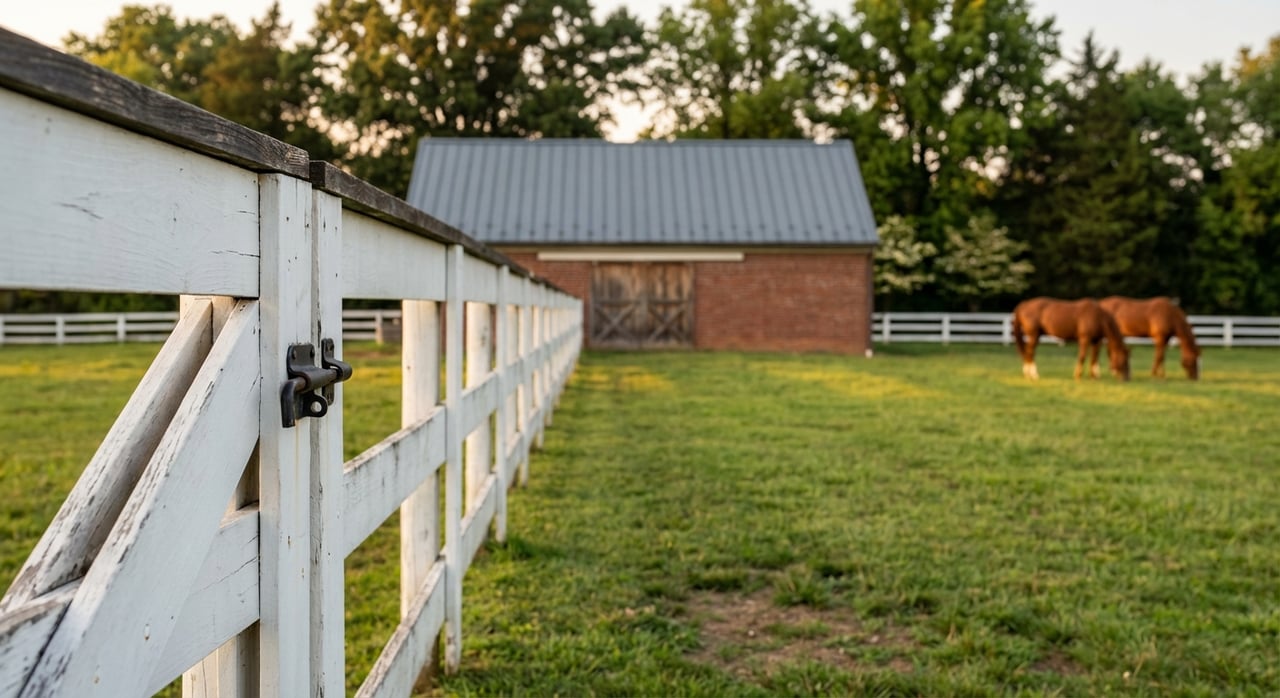
If you dream of waking up to rolling pastures, fence lines, and the quiet hum of farm life, Versailles puts horse country right outside your door. You might not own a horse, and that’s okay. Many residents choose Versailles for its pastoral setting, small‑town feel, and easy access to Lexington. In this guide, you’ll learn what everyday life beside world‑class horse farms really looks like, what to expect season by season, and how to buy confidently if you want an acreage or horse‑friendly lot. Let’s dive in.
Why Versailles draws horse‑country neighbors
Versailles sits in the heart of Kentucky’s Inner Bluegrass, surrounded by working thoroughbred farms and scenic rural land. You feel close to the countryside yet still connected to the region.
Commute and access
You can typically reach central Lexington in about 20 minutes, depending on start and end points. For a quick reference, check the Versailles to Lexington drive distance and time using a simple route tool like Travelmath’s route lookup. Blue Grass Airport often runs about a 10 to 15 minute drive from many Versailles addresses.
Small‑town base, regional reach
Downtown Versailles offers everyday staples, independent shops, and civic services. Many residents keep a small‑town home base while tapping Lexington for broader dining, cultural venues, and medical centers. That balance is part of the appeal.
What life beside horse farms feels like
Living near active farms means your surroundings are not staged scenery. They’re working landscapes shaped by breeding schedules, training, and seasonal events.
Morning rhythms
Expect early movement on certain days: trucks on narrow country roads, tractors in fields, and farm teams starting their day before sunrise. Public morning workouts and training culture shape the regional routine. If you’re curious, the Keeneland track overview at AmWager offers a fan‑level look at morning works and racing context.
Sights, sounds, and scents
You’ll see stone and board fencing, broad paddocks, and classic barns. Rural life also brings normal farm odors from manure and hay, plus occasional dust from gravel or dirt lanes. The intensity varies by wind, season, and nearby farm activity. Most neighbors consider it part of the landscape’s authenticity.
The Keeneland season effect
Spring and fall racing brings extra energy to the region. Traffic can run heavier on certain weekends, and you’ll notice more visitors on country roads. For a feel of the seasonal momentum and timing, see Keeneland’s fall meet update.
Weekend life: farms, distilleries, and tours
Versailles gives you a rare mix of quiet country living and meaningful things to do just down the road.
Distillery in the pastures
Set among the same rolling hills and fences, Woodford Reserve Distillery’s visitor experience brings tasting rooms, tours, and events that draw friends and family to your side of the Bluegrass.
Signature horse farms
Some of the most prominent thoroughbred operations offer public‑facing programs. For example, you can learn about tours and contact details at WinStar Farm. Seeing these places up close gives you a deeper appreciation for why the landscape looks the way it does.
Regional equestrian outings
Within a short drive, you can catch races, auctions, and equestrian events throughout the year. Your weekends can swing from quiet paddock views to top‑tier horse experiences with very little planning.
Buying near horse country: what to know
If you want a hobby farm, a horse‑friendly lot, or simply a home that backs to pastures, a little due diligence goes a long way. Here are the essentials.
Zoning and permitted uses
In Woodford County, many equine operations are treated as agriculture under local definitions, including the raising and stabling of horses for commercial purposes. That’s a key reason the countryside stays devoted to farms rather than subdivisions. You can review the county’s agricultural definitions in the Woodford County Code.
What this means for you: living beside a farm often means living beside an agricultural business. Expect active neighbors and typical farm activity.
Conservation and easements
Parts of Woodford County use conservation easements to preserve rural character. Easements can limit future development on a parcel while protecting open pasture and equine landscapes. To learn how these programs work, see the county’s Rural Land Board and conservation easement framework.
What this means for you: confirm any recorded easements before you buy. Easements can be positives if you prize long‑term pasture views.
Utilities, septic, and lot splits
Historically, Woodford County has managed septic‑served subdivisions carefully. Case history shows how septic and subdivision rules can shape smaller‑lot development. If you’re considering a split or a property with private wastewater, review options with planning and health authorities first. A relevant example is summarized in a Kentucky Supreme Court case on Woodford subdivision and septic constraints.
What this means for you: never assume a small split or a new septic system will be straightforward. Ask about soil tests, system capacity, and local limits early.
Structures and permits
Whether you plan to update a barn, add a run‑in, or build a new outbuilding, expect standard building rules to apply. If your parcel sits inside city limits, municipal codes can be more restrictive than rural areas. Review building and permitting guidance in the City of Versailles code reference and confirm next steps with the Planning and Zoning office before you start.
Property checklist for buyers
Use this quick list when you tour horse‑country properties:
- Fences and boundaries: type, condition, and any shared maintenance or right‑of‑way issues.
- Water and sewer: identify public water, private well, and septic; pull permit history and ask about capacity.
- Access: check road maintenance, driveway grade, and seasonal conditions for gravel or long lanes.
- Barns and sheds: verify permits and safety, and evaluate repair costs if you plan to keep animals.
- Easements and restrictions: confirm recorded conservation easements or utility easements at closing.
- Neighboring uses: note nearby farm activity and typical hours to make sure the rhythm fits your lifestyle.
Want a horse‑friendly life without owning horses?
Many Versailles buyers love the setting but do not want daily animal care. That’s normal. You can live on a small acreage and board horses at a local facility, or enjoy the scenery with no animals at home. If you do plan to keep a few horses, understand the difference between hobby keeping and commercial operations. The county treats commercial raising and stabling as agriculture under the code, and your specific plans should be verified with Planning and Zoning.
How to buy with confidence
Here’s a simple, low‑stress process to follow:
- Clarify your lifestyle goals. Decide if you want an acreage, a small horse‑ready lot, or a home with farm views inside a neighborhood.
- Map your drives. Test run commute routes and airport access at the times you’d use them most.
- Do early due diligence. Ask Planning and Zoning about permitted uses, easements, septic constraints, and any municipal boundaries affecting your lot.
- Walk the land. Inspect fences, barns, gates, and access on foot. Look for drainage patterns and seasonal wear.
- Align the plan. If you want to add a barn or fence, discuss permitting and costs before you finalize your offer.
When you’re ready to explore, work with a local adviser who understands both the romance and the rules of horse country. Janna Smith brings farm‑rooted experience, proven rural transactions, and a calm, consultative approach to help you buy the right Bluegrass property for your life.
FAQs
What is the commute from Versailles to Lexington like?
- Many residents report about a 20‑minute drive to central Lexington, depending on your exact start and end points and traffic patterns.
What should I know about zoning near horse farms in Versailles?
- Equine operations are treated as agriculture under county code, so you should expect normal farm activity and confirm permitted uses with Planning and Zoning before you buy.
Will traffic increase during racing season around Versailles?
- Yes, spring and fall racing at Keeneland bring more visitors and busier weekends throughout the Bluegrass, including roads around Versailles.
Can I build a barn or new fence on a small acreage in or near Versailles?
- Often yes, but you need to check whether the property is inside city limits and review permits and building codes with Planning and Zoning before starting.
I don’t own horses. Is Versailles still a good fit?
- Absolutely. Many residents choose the area for its scenery and small‑town feel, enjoying boarding options or simply living beside pastures without animals at home.